TSY or Custom Brands
| Availability: | |
|---|---|
| Quantity: | |
| Color | Bright, light red brown color with golden |
| Flavor | Salty, sweet and Fresh Good Taste, Strong Sauce Flavor |
Brief Description | It is taste fresh and delicious,it is widely used for Japanese cuisine and grill.Especially for chicken,seafoods,teriyaki chicken leg steak, teriyaki pork steak and other dishes. |
| Ingredient | Water, Soy bean, Wheat Flour, Sugar, Salt, Modified Corn Starch, etc. |
| Usage | Perfect as a dipping sauce for sashimi and sushi, and also as a condiment for stir-fries and marinades. |
| Nutrition information | Energy 459Kj/110Kcal, Protein 5.2g, Total Fat 0.6g, Total Carbohydrate 21.8g, Sugar 16.5g Sodium 3555mg |
| Shelf Life | 2 years |
| Storage | Close the lid tightly and keep refrigerated after use. |
| Delivery Time | 15-20days |
| Certificate | HACCP, BRC, IFS, HALAL, KOSHER, ISO |
A sashimi umami vegan sweet soy sauce should have several key features:
Sweet soy sauce, also known as kecap manis, is a thick, dark, and sweet Indonesian sauce commonly used in Indonesian, Malaysian, and other Southeast Asian cuisines. It is made from a combination of soy sauce, palm sugar, and various spices. Here is a detailed introduction to sweet soy sauce:
Ingredients: The main ingredients of sweet soy sauce are soy sauce (made from fermented soybeans), palm sugar (or brown sugar), water, and various spices such as garlic, star anise, and galangal. Some variations may also include additional flavorings like ginger, cinnamon, or cloves.
Flavor Profile: Sweet soy sauce has a unique balance of flavors, combining sweetness, saltiness, and umami. The sweetness comes from the palm sugar, while the soy sauce provides the savory and salty elements. The spices add complexity and depth to the sauce.
Consistency: Sweet soy sauce has a thick and syrupy consistency, similar to molasses or honey. This thickness helps it cling to food and adds a glossy sheen when used as a glaze or marinade.
Uses: Sweet soy sauce is a versatile condiment used in various dishes. It can be used as a dipping sauce, marinade, glaze, or ingredient in cooking. It is commonly used in stir-fries, noodle dishes, fried rice, grilled or roasted meats, and as a dipping sauce for spring rolls or dumplings. It adds a rich, sweet, and savory flavor to these dishes.
Variations: There are different variations of sweet soy sauce available, with some being more concentrated and sweeter than others. Some may have a stronger molasses-like flavor, while others may have a lighter and more balanced sweetness. The level of sweetness can vary depending on personal preference and the brand or recipe used.
Store-bought vs. Homemade: Sweet soy sauce is widely available in stores, both in Asian grocery stores and online. However, it can also be made at home by simmering soy sauce, palm sugar, and spices together until the desired consistency and sweetness are achieved. Homemade versions allow for customization and adjustment of flavors to suit individual preferences.
Overall, sweet soy sauce is a delicious and versatile condiment that adds a unique sweet and savory flavor to a variety of dishes. Its rich and thick consistency makes it a popular choice in Southeast Asian cooking.
SPECIFIATION PER CTN | PACKS TYPE | CTNS/20'GP |
| 8g*1000pcs | Sachet | —— |
| 10ml*250pcs*4boxes | Sachet | —— |
| 12ml*250pcs*4boxes | Sachet | —— |
| 25ml*150pcs*4boxes | Sachet | —— |
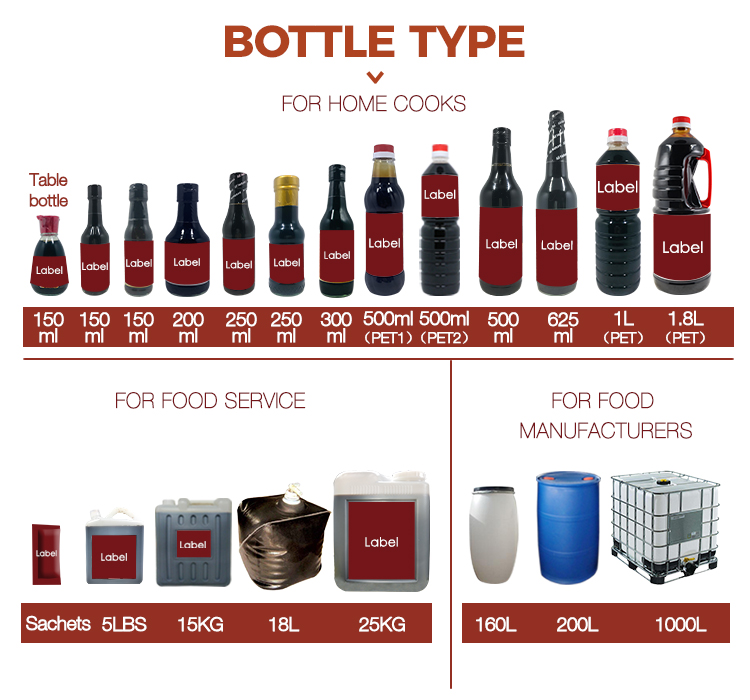
150ml*12btls/box*4boxes | Glass bottle | 1010 |
150ml*24btls | Table bottle | 1855 |
200ml*24btls | Glass bottle | 1550 |
250ml*24btls | Glass bottle | 1550 |
300ml*12btls | Glass bottle | 1550 |
| 500ml*12btls | Glass bottle | 1550 |
625ml*12btls | Glass bottle | 1330 |
* If you have other needs, please consult us.

TSY sweet soy sauce has a wide range of uses, far more than just being a simple dipping sauce.
It plays multiple roles in cooking with its complex flavor that blends saltiness, freshness and sweetness, as well as its thick and juicy texture.
The following are the main uses of TSY sweet soy sauce, which are classified into different scenarios and functions:
First, as a core seasoning, it endows the dish with a soul
This is the most classic usage of sweet soy sauce, especially in Southeast Asian cuisine.
The soul of Indonesian and Malay cuisine
Fried rice and fried noodles: They are essential seasonings for Indonesian fried rice and Malay fried noodles, offering the signature dark sauce color and a salty and sweet base flavor.
Satay: It serves as both the marinade for satay skewers and the base for their dipping sauce, giving the grilled skewers an inviting luster and sweet aroma.
Stews and grilled meats: Used in various stews and grilled meats, such as Indonesian Padong beef, it enriches the flavor layers.
The essence of Japanese teriyaki flavor
Teriyaki series: Although it often appears in the form of "teriyaki sauce", its essence is Japanese sweet soy sauce. It is used to make teriyaki chicken cutlets, teriyaki salmon, etc., to form a shiny and inviting sauce film on the surface of the dishes.
Second, it can be used as a dipping sauce or cold dressing to directly enhance the flavor
Excellent dipping sauce
Satay dipping sauce: Mix with peanut butter, chili peppers, etc. to make a classic satay peanut dipping sauce.
Dumpling and dim sum dipping sauce: Mix with minced garlic, chili rings or vinegar to provide a unique dipping sauce for dumplings, spring rolls and fried foods.
In Taiwan and South China, sweet sauce is the top choice for dipping white-cut chicken and white-cut pork.
Delicious cold dressing
Cold noodles and cold vermicelli: They provide the basic sweet and salty flavors for Indonesian cold dishes, Yunnan cold rice noodles, etc.
Salad dressing: It can be mixed with lemon juice, oil and garlic to make an Asian-style salad dressing.
Third, as a marinade and barbecue sauce, it enhances the flavor profile
High-efficiency marinade
The sugar in TSY sweet soy sauce can undergo a "Maillard reaction" with protein, generating a smoky aroma and an inviting reddish-brown color during cooking.
It is used for marinating chicken, pork, beef and tofu, making the ingredients more flavorful and the color more beautiful after roasting or frying.
Delicious barbecue sauce
During the barbecue process, it can be directly brushed on the surface of meat skewers and chicken wings and used as barbecue sauce. Its thick texture can adhere well to food, forming a delicious crust.
Fourth, as a "secret weapon", it adds color and flavor to home-cooked dishes
Even if not used in international cuisine, sweet soy sauce can still shine brightly in Chinese home-cooked dishes.
Braised and marinated foods: When braising pork, marinated eggs, and marinated chicken legs, adding a small amount of sweet soy sauce (or directly using it to replace part of the dark soy sauce and sugar) can make the color more rosy and the flavor more mellow.
Sweet and sour dishes: As one of the bases for sweet and sour sauce, it simplifies the seasoning steps.
Balance the saltiness: When a dish is accidentally made too salty, you can add a little sweet soy sauce to use its sweetness to balance and moderate the saltiness.
Dipping boiled eggs or tofu in water: A simple yet delicious way of eating, which can greatly enhance the flavor of the food.
Tips for Use
Note the sugar content: As TSY sweet soy sauce has a high sugar content and is prone to burning, it is recommended to use medium-low heat when frying or stir-frying, or add it just before the dish is ready to be served.
Reduce salt as appropriate: When using sweet soy sauce, the amount of other salty seasonings in the recipe (such as salt and regular soy sauce) should be appropriately reduced.
Alternative solution: If sweet soy sauce is not available, you can mix 1 part regular soy sauce with 0.5 to 1 part brown sugar/honey and simmer over low heat until it thickens slightly as a substitute.
In summary, TSY sweet soy sauce is a highly distinctive "flavor enhancer". It can not only independently play the leading role in the taste of dishes, but also serve as a golden supporting role, bringing deep colors, complex textures and alluring luster to various dishes.
Yes, we provide professional custom recipe services. We can tailor the flavor, saltiness, spiciness, and ingredient composition according to your target market’s eating habits, dietary preferences, and brand positioning. Our R&D team will provide 2-3 samples for your taste test and make adjustments repeatedly until you are satisfied.
Absolutely. We adopt strict standardized production processes and precise ingredient measurement control. Each batch of sauce will go through taste testing and quality inspection before leaving the factory to ensure that the flavor, texture, and taste are completely consistent, avoiding taste differences between batches.
We offer a variety of packaging options, including glass bottles, plastic bottles, pouches, and jars, with customizable capacities (8ml-1000L). We fully support private label customization, including Logo printing, label design, multilingual labels (English, local languages), barcode, and outer carton customization, providing one-stop packaging solutions.
Our sauces have passed multiple international food safety certifications, including ISO9001,ISO14001, HACCP, FDA,Kosher, and Halal (optional). We implement a full-process quality control system from raw material inspection to finished product delivery, and can provide relevant certification documents and quality inspection reports for each batch of goods.
The MOQ depends on the product type and packaging specification. For standard sauces, the MOQ is 100 cartons; for custom-made sauces (recipe + packaging), the MOQ is 300 cartons. For large-volume orders, we can provide more favorable pricing and flexible MOQ negotiation.