
High-Quality Monosodium Glutamate (MSG) for Global Food Innovation
Trusted MSG Manufacturer & Supplier Since 2000 | ISO, HACCP, Halal Certified
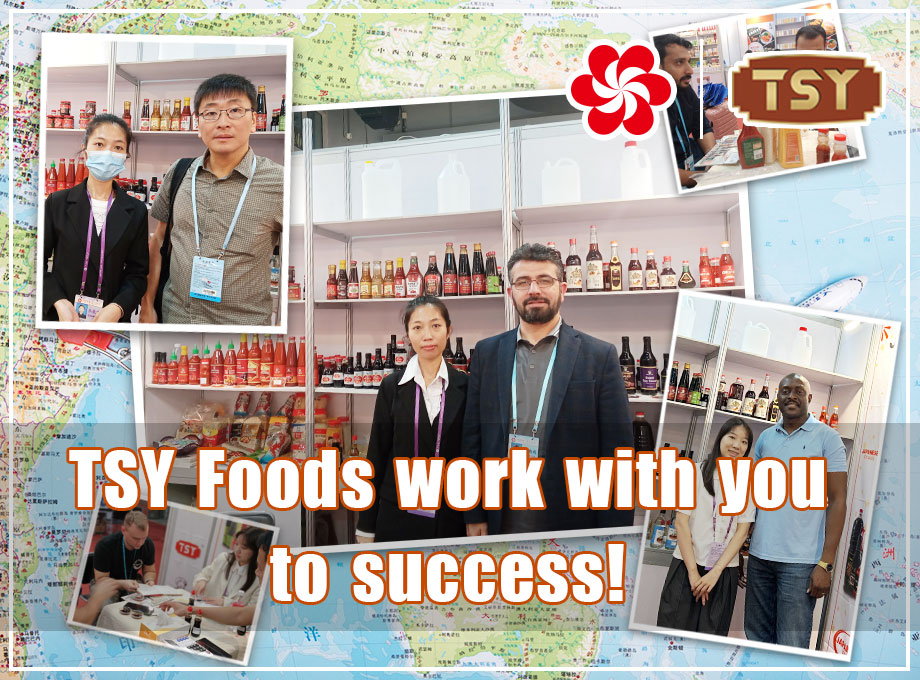
Welcome to Xingtasty
Guangdong Tasty Foodstuffs Co.,Ltd. , a leading MSG manufacturer based in China, delivers premium-grade monosodium glutamate for chefs, food producers, and global brands. With 20+ years of expertise, our gluten-free MSG enhances flavor profiles in soups, sauces, snacks, and ready-to-eat meals. Partner with us for competitive pricing, fast delivery, and tailored OEM/ODM solutions.
What Is MSG? | Flavor-Enhancing Monosodium Glutamate
Key Features
Certified Quality: ISO9001, HACCP, Halal, Kosher
Versatile Use: Ideal for soups, marinades, snacks, and soy sauce enhancements
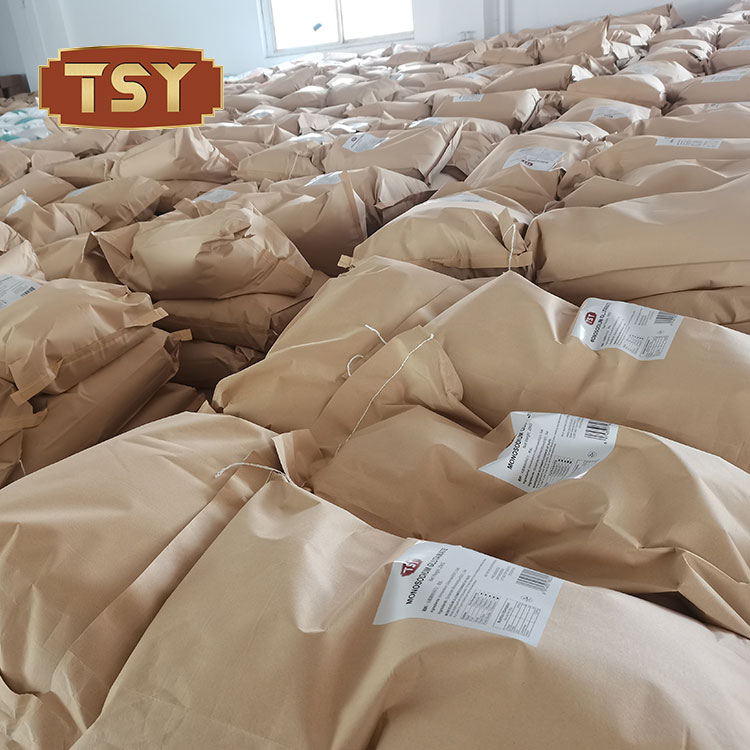
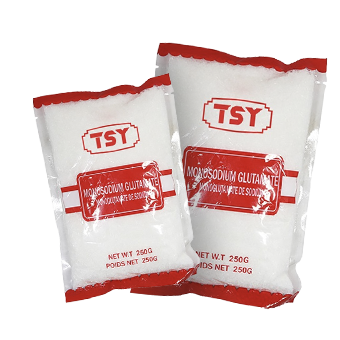
Custom Packaging: Available in 100g, 250g, 454g, or 25kg bags, and other sizes.
Product Overview
Monosodium Glutamate (MSG) is a common food additive that enhances the savory or umami flavor in dishes. It is naturally found in foods like tomatoes and cheese, and is widely used in a variety of processed food products. But what is MSG and how does it work? MSG helps enhance the natural flavors of food, making it a popular ingredient in the food industry. At Xingtasty, we produce monosodium glutamate (MSG) with high purity, crafted to elevate umami flavors in sauces, soups, snacks, and ready-to-eat meals. Our gluten-free MSG is derived from non-GMO ingredients and rigorously tested to meet global food safety standards. Whether you’re a chef, food manufacturer, or retailer, our MSG delivers unmatched taste consistency and versatility.


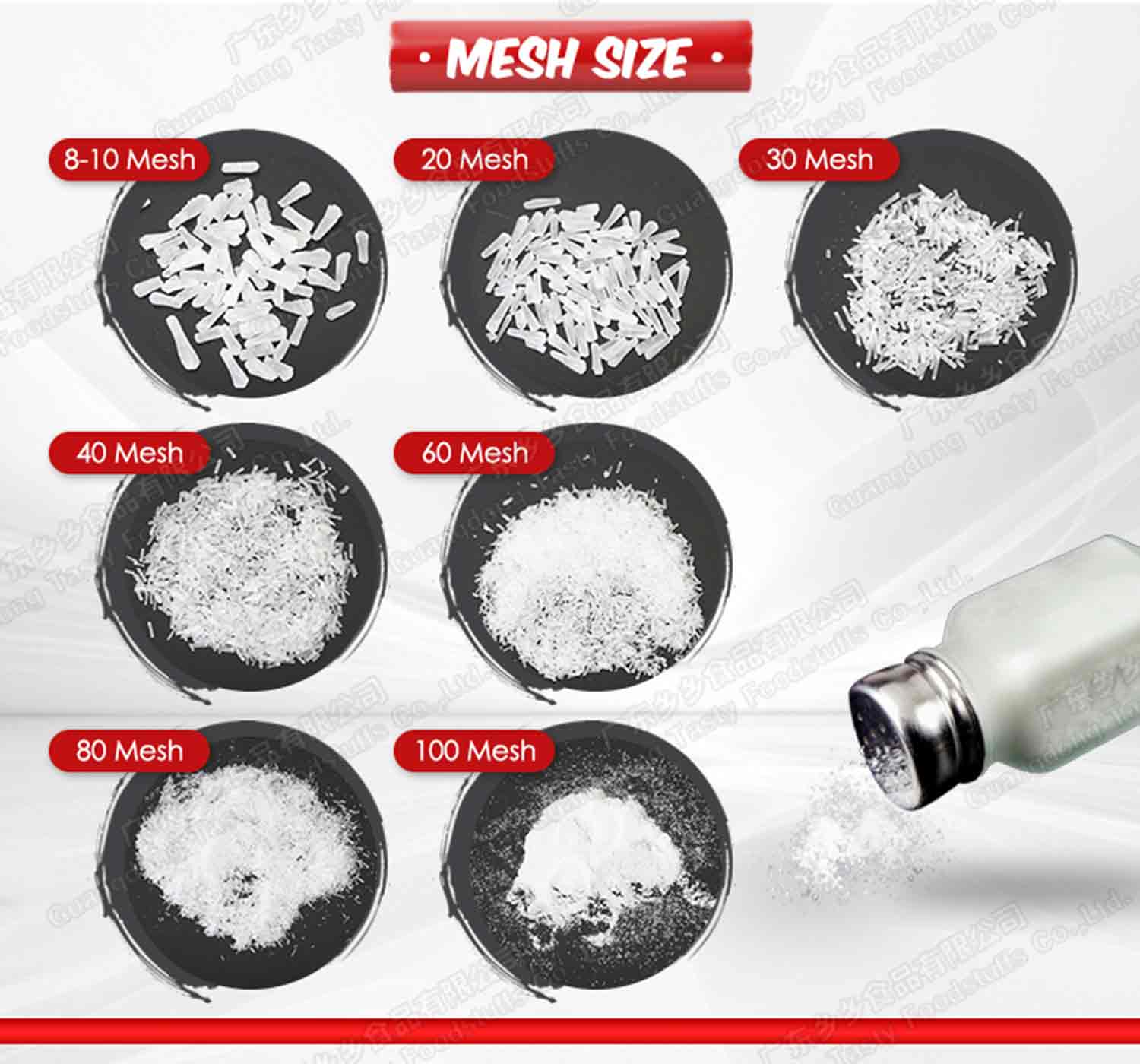
MSG Mesh Sizes – Select the Ideal Granule for Your Needs
Why Choose Xingtasty MSG?
Reliable MSG Supplier for Restaurants, Hotels & Retailers
20+ Years Expertise: Serving Walmart, Tesco, and global food brands since 2000.
OEM/ODM Solutions: Customize MSG nutrition labels, packaging, and formulations.
Fast Delivery: Bulk bags of MSG shipped globally within 7-10 days.
Gluten-Free & Safe: Lab-tested to ensure no MSG alternatives compromise quality.
Competitive Pricing: Direct factory rates for wholesale buyers.
Versatile Applications of MSG in Culinary Creations
Monosodium Glutamate (MSG) is known for its ability to bring out the umami flavor in food. This makes it an essential ingredient for a wide variety of dishes, from savory soups and sauces to meats and vegetables. Adding MSG to chicken noodle soup, for example, can create a more satisfying and flavorful meal.
Pro Tip: Replace 30% of salt with MSG to cut sodium content without sacrificing flavor.


FAQs About Monosodium Glutamate (MSG)
Yes! Our monosodium glutamate is gluten-free, allergen-tested, and certified Halal/Kosher, making it safe for gluten-sensitive diets.
Contact Xingtasty for Your MSG Supply
Need more information about our Monosodium Glutamate (MSG) products? Get in touch with Xingtasty today to learn more about our offerings, pricing, and bulk purchase options. Whether you’re looking to enhance your cooking or need a reliable supplier for your business, we’re here to help!
Wechat:+86-13144007460
E-mail:contact@xingtasty.com
Telephone:+86-15976010975、+86-0760-88884936
Address:
No.101, Dongyuan South Road, East District, Zhongshan, Guangdong, China
Our latest news

Official Exhibition Invitation (SIAL PARIS & Canton Fair)
We are a reliable factory specializing in the R&D, production and customization of various seasonings & sauces, instant noodles, and canned food. Equipped with standardized production workshops, complete production lines and strict quality control systems, we support OEM & ODM customized services to meet diverse market and customer requirements. With stable supply capacity, competitive pricing and premium product quality, our products are exported to many countries and regions, winning wide recognition from global clients.

Complete Guide To Soy Sauce Types: Features And Applicable Scenarios
Soy sauce is an indispensable core condiment in Chinese cooking, widely used in home stir-fries, braised dishes, marinated foods, steaming and cold salads. Many people casually use different soy sauces while cooking, unaware that various types of soy sauce differ greatly in brewing techniques, flavor characteristics and applicable scenarios. Improper use will fail to enhance the flavor of dishes and may even ruin their original color and taste. This article comprehensively introduces mainstream soy sauce types on the market, clarifies their respective uses, and helps you select and use soy sauce scientifically for all kinds of cooking scenarios.

How Long Does Sweet Chilli Sauce Last Once Opened
Sweet chilli sauce is a versatile and flavorful condiment that adds a delicious kick to a wide range of dishes. Whether you use it as a dipping sauce, marinade, or drizzle it over your favorite foods, sweet chilli sauce can elevate the taste of your meals. However, once you've cracked open a bottle of this delectable sauce, how long can you expect it to last before it loses its freshness and flavor?

Does soy sauce expire?
Soy sauce is a staple condiment in many kitchens worldwide, known for its rich umami flavor and versatility in cooking. Whether used as a dipping sauce, marinade, or seasoning, it plays a crucial role in Asian cuisine and beyond. However, like any other food product, consumers often wonder about its

TSY Food Showcases Authentic Soy Sauce at SIAL PARIS 2024
TSY Food is set to make a significant impact at SIAL Paris 2024 by showcasing its authentic soy sauce products. Known for their commitment to quality and tradition, TSY Food is likely to present a range of soy sauces that cater to both traditional and modern culinary preferences.

Which Is The Healthiest Soy Sauce?
Which is the healthiest soy sauce? Many shoppers, home chefs and food buyers struggle with this question when standing in front of shelves full of different soy sauce bottles. Dark soy sauce, light soy sauce, low-sodium soy sauce, brewed soy sauce, blended soy sauce — the variety makes it hard to tell which option is truly healthy. To pick the healthiest soy sauce, we need to understand how soy sauce is made, key ingredient labels, nutrition facts, and common additives.

Welcome To Visit TSY at ESPACIO RIESCO Food Show in Chile!
We are TSY Sauce Factory, based in Yunfu, Guangdong, China. This autumn, we are traveling to South America to exhibit at the ESPACIO Food & Service show, taking place from September 29 to October 1 at the Espacio Riesco Convention Center in Santiago, Chile. We sincerely invite all our old and new friends to visit our booth, renew partnerships, and explore new opportunities together.

How Long Is The Shelf Life of Canned Foods After They've Been Opened?
Canned foods are celebrated worldwide for their exceptional shelf stability, convenience, and nutritional reliability. Sealed, unopened cans can sit in kitchen pantries for years without spoiling, making them a staple for household cooking, emergency preparedness, and quick daily meals. Yet most home cooks encounter a common dilemma: once a can is punctured and opened, how long do its contents remain safe and fresh to eat? Many people mistakenly assume canned food retains its long-term durability after opening, but the truth is drastically different. After breaking the airtight seal, canned foods lose their industrial preservation protection and become nearly as perishable as freshly cooked ingredients. Understanding the exact post-opening shelf life of canned foods, along with key safety rules and storage practices, is critical to avoiding food waste, preventing bacterial illness

Are peeled tomatoes considered a condiment?
Walk into any home kitchen, professional restaurant, or grocery store pantry, and you will almost certainly find a jar or can of peeled tomatoes. These soft, skin-free tomato fruits, preserved in their natural juice with minimal seasoning, are staples of global cuisine, especially Italian, Mediterranean, and Western savory cooking. Yet a persistent culinary question lingers among home cooks, food enthusiasts, and even industry professionals: are peeled tomatoes officially classified as a condiment? The answer is not as straightforward as it seems, as it hinges on precise culinary definitions, functional usage, food industry categorization, and regional cooking traditions. To resolve this confusion, we must distinguish between core culinary terms, analyze the inherent properties of peeled tomatoes, and explore how their role differs from traditional condiments and standard cooking ingredients.
