You can buy several popular brands of sesame oil online today. Xingtasty (TSY) stands out as a certified, versatile option. Other well-known names include Kadoya, Spectrum, and Kevala. Each brand serves a different purpose. Some work best for high-heat cooking, while others suit dipping, finishing, or skincare routines.
This post compares these brands on quality, intended use, certifications, and price. You will see how extraction methods and smoke points differ. You will also learn where each Sesame Seed Oil fits best. The goal is simple: help you match a bottle to your own kitchen or skincare needs. Read on to choose with confidence.
Key Takeaways
Pick sesame oil based on how you plan to use it: high-heat cooking, finishing, or skincare.
Look for certifications such as ISO 9001, HACCP, Kosher, and Halal to make sure the product is good quality and safe.
Check the price per ounce for different sizes and brands to find the best deal.
Pick the extraction method that fits what you need: cold-pressed for skincare, toasted for flavor.
Think about Xingtasty for certified, flexible choices with bulk and OEM support.
Popular Sesame Oil Brands Online
Xingtasty (TSY) Sesame Oil
Xingtasty (TSY) offers one of the largest sesame oil selections you can order online. The lineup includes pure, cold-pressed, roasted black, blended, and roasted edible black styles. You can choose a mild option for everyday cooking or a deep roasted one for hot-pot dipping and finishing dishes. The cold-pressed version keeps a cleaner, more direct sesame taste. The roasted black version brings a deeper toasted note that holds up well in dipping sauces.
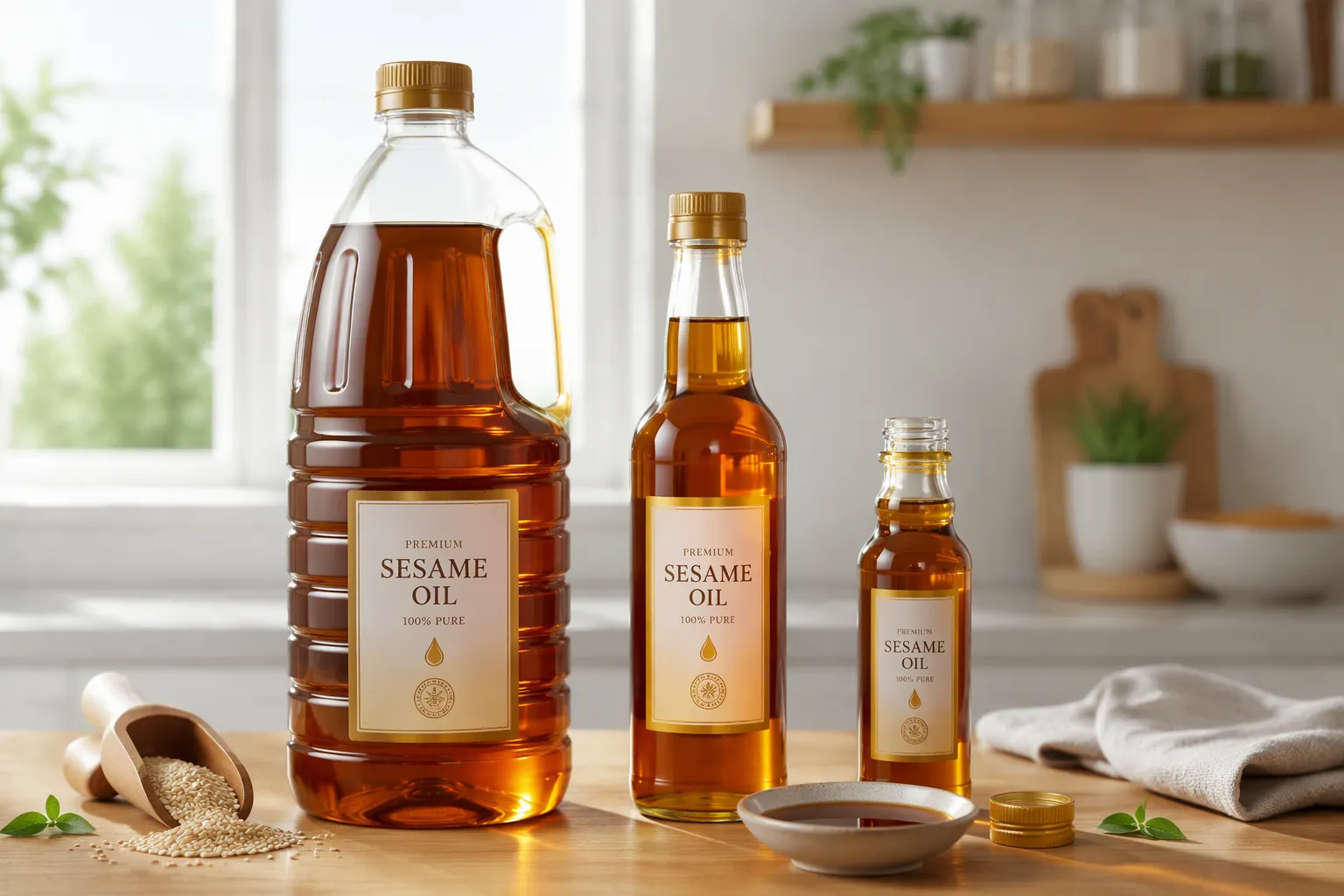
Packaging ranges from small 108 ml bottles up to 1.8 L formats. Listed sizes also include 150 ml, 200 ml, 250 ml, 500 ml, and 625 ml. Glass bottles work well for retail shelves and gift presentation. PET bottles handle larger kitchen and foodservice volumes. The manufacturer, Guangdong Tasty Foodstuffs Co., Ltd., holds ISO 9001, HACCP, Kosher, and Halal certifications. That mix matters if you sell into diverse markets or serve guests with specific dietary needs. The company has produced food since 2000 in a facility of roughly 100,000 square meters. Its products reach supermarket chains such as Walmart and Tesco.
Business buyers get extra flexibility. Xingtasty supports OEM, ODM, and private-label projects. You can request custom flavor profiles, packaging sizes, and branding. The company also offers bulk wholesale supply and free samples. You order through the official Xingtasty website or by contacting the sales team directly. A simple inquiry starts the process, and the team confirms specifications before quoting.
Other Leading Sesame Oil Brands
Several other brands also sell this oil online, and each one fits a particular job. None of them is a universal winner. The right pick depends on how you plan to use the bottle.
Kadoya is a Japanese brand known for toasted sesame oil. Its dark, nutty profile works well for finishing ramen, dressings, and stir-fries. Home cooks who want a restaurant-style drizzle often reach for it. You will find it on major e-commerce platforms and Asian grocery sites.
Spectrum offers organic and expeller-pressed cooking oils. Its sesame seed oil suits everyday cooking and baking. Shoppers who prioritize organic labels will find it a natural fit. Supermarket sites and natural-food retailers commonly stock it.
Kevala sells cold-pressed sesame oil in larger bottles. Cold pressing extracts oil without added heat, which preserves a fresh flavor. Many buyers use it for massage, skincare, and oil pulling. It appears on brand websites and large online marketplaces.
You can also find budget store brands on supermarket sites. These work fine for high-volume frying and general cooking. Check the label to confirm whether you get pure sesame seed oil or a blend. Each option has a clear role, so compare them by use rather than by rank.
Online channels stay fairly consistent across brands. You can buy from brand websites, major e-commerce platforms, and supermarket sites. Some manufacturers also accept direct inquiries for bulk orders. Shipping options and pack sizes vary by seller, so read the listing before you check out. A quick price check across two or three sites often reveals a better deal on the same bottle.
Sesame Seed Oil Quality and Price Comparison
Smoke Point and Extraction Method
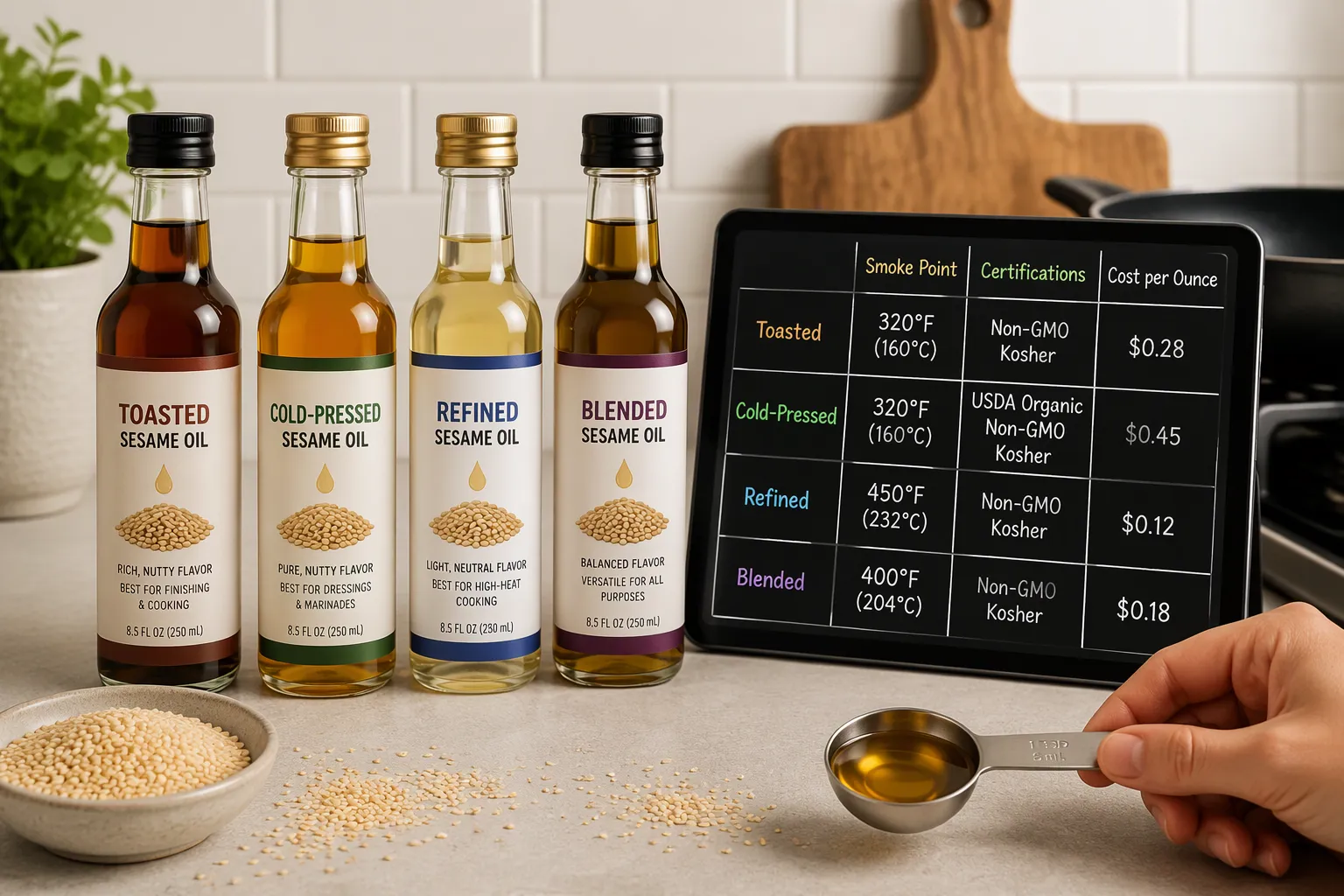
Smoke point shows how much heat a bottle can take before it burns and turns bitter. Untoasted, refined sesame seed oil handles higher heat well, so it works for stir-frying and general cooking. Toasted oils have a lower smoke point, so they work better as finishing oils, dressings, and dips. Cold-pressed oil keeps a fresh, clean flavor because the process avoids added heat. Physically pressed oil follows a similar path without chemical solvents. Blended sesame oil mixes sesame with other oils, which lowers cost and changes how it performs at the stove. A high smoke point matters for frying. A low one matters for aroma. Pick the oil for the job, not the label.
Each brand sits in a different spot on this map. Kadoya's toasted style works for low-heat finishing and a drizzle over noodles. Spectrum's expeller-pressed oil fits everyday cooking and baking. Kevala's cold-pressed oil is better for raw and cosmetic uses such as massage. Xingtasty covers the widest spread here. Its cold-pressed pure option serves clean-label cooking. Its roasted black style works for dipping and hot pot. Its blended sesame oil line handles supermarket cooking at a lower price point. Roasted and untoasted versions also differ in color and aroma depth. You can match the extraction method to your heat level instead of guessing.
Certifications and Cost per Ounce
Certifications give you a quick read on a supplier's quality systems. Xingtasty holds ISO 9001, HACCP, Kosher, and Halal. That combination covers food safety management and two major religious dietary standards. Spectrum leans on organic labeling. Kevala emphasizes cold-pressed purity. Kadoya trades on its Japanese origin and toasted profile. Check each label for the claims that matter to you, and confirm them for the exact SKU you plan to buy. Ask the seller for current certificates.
Cost per ounce shifts with bottle size and format. Small glass bottles cost more per ounce than large PET formats. Bulk sizes lower the unit price, and that gap widens fast as volume grows. Xingtasty quotes bulk and OEM pricing on inquiry, so you can request a figure for your own volume. Retail brands publish prices on their listings, which makes quick comparison easy. Divide the bottle price by its ounce count to get a true per-ounce number. Compare like with like: pure against pure, blended against blended. A cheap blended bottle and a pure cold-pressed sesame seed oil bottle are not the same product, so a raw price gap can mislead you. Ask for a sample before a large order. A sample lets you test flavor and performance at your own stove.
No single brand wins on every measure. One leads on certifications, another on organic labels, another on toasted flavor. A certified bottle may cost more, and that premium buys documented safety checks. Weigh smoke point, extraction method, and per-ounce cost against your own use.
Benefits of Sesame Oil for Cooking and Skin
Sesame Oil Health Benefits
Studies connect sesame oil to several possible benefits. The oil has a lot of antioxidants, like sesamin and vitamin E. These help the body fight inflammation and oxidative stress. Research suggests links to heart health, cholesterol levels, and blood sugar control. Some studies point to better cardiovascular and metabolic health. Other work looks at anti-inflammatory and antioxidant activity, plus bone quality and oral health through oil pulling. These are general links from published studies, not medical claims. Check each product label and talk to your doctor before you use any food as a treatment.
You can connect these possible benefits of sesame oil to your brand choice. Cooking oils work for daily meals. Cosmetic oils work for massage and skin care. Toasted styles give deeper flavor. Untoasted styles stay neutral. Pure oils give you full sesame content. Blended oils mix sesame with other oils. Xingtasty says its sesame oil has no additives and offers cold-pressed options. That mix fits clean-label buyers who want simple ingredients. The company also mentions science-backed and evidence-based health benefits in its product materials. Treat those claims as general information, not promises.
Culinary and Skincare Uses
Sesame oil has culinary, medicinal, and cosmetic uses. In the kitchen, it finishes noodles, soups, stir-fries, and dumplings. A drizzle adds a nutty smell without heavy seasoning. Toasted black styles work well for hot-pot dipping. Cold-pressed styles work for dressings and light cooking. In skin care, the oil moisturizes skin and hair. Many people use it for massage and oil pulling. Its unsaturated fats and antioxidants make it a popular carrier oil.
The benefits of sesame oil for skin and cooking depend on the grade you buy. Cosmetic use needs pure, cold-pressed oil with no additives. Cooking use gives you more choices. You can pick toasted for flavor or untoasted for heat. Sesame seed oil also brings strong anti-inflammatory properties to traditional remedies. These uses come from long-standing practice and general research, not guaranteed results. Read the label, check the grade, and match the bottle to your purpose. A cooking oil and a massage oil can come from the same brand, but they may not be the same product.
Which Sesame Oil Brand Fits Your Needs?
Best for Cooking vs. Skincare
Begin with how you plan to use the oil. For high-heat cooking, pick an untoasted, refined sesame oil that has a higher smoke point. For finishing, dipping, or hot pot, a toasted or roasted black style gives you deeper flavor. For massage and skincare, choose a pure, cold-pressed bottle with no additives. Then check certifications and compare the price per ounce. This simple checklist helps you avoid buying the wrong grade.
Xingtasty works for buyers who want certified supply in many formats. Its range covers cold-pressed, roasted black, blended, and pure styles in glass and PET bottles. The ISO 9001, HACCP, Kosher, and Halal certifications support retail and foodservice buyers. OEM and private-label options help distributors build their own brand. Kadoya suits you if you want a toasted finishing oil. Spectrum fits organic and everyday cooking needs. Kevala works well for cold-pressed skincare and massage use. Each brand has a clear role, so match the bottle to your task.
Best for Budget vs. Premium Buyers
Budget buyers should compare price per ounce across sizes. Large PET formats usually cost less per ounce than small glass bottles. Store brands work fine for high-volume frying. Check the label first, because a blended bottle and a pure bottle are different products. A low price on a blend does not mean a low price on pure oil.
Premium buyers pay for documented quality and specific flavor. Certified supply, cold-pressed processing, and roasted aroma justify a higher price. Xingtasty quotes bulk and OEM pricing on inquiry, which suits commercial volume. Retail brands publish listing prices, which makes quick comparison easy. Weigh the sesame oil health benefits you actually need against the cost. General research links sesame oil to antioxidant content and possible heart support, yet these are associations, not promises. The benefits of sesame oil for skin depend on grade, so buy pure cold-pressed oil for cosmetic use. Good health and good cooking both start with the right bottle, not the most expensive one.
You now have a clear view of the main choices. Xingtasty (TSY) fits buyers who want a certified range in many formats with OEM support. Kadoya suits toasted finishing and dipping. Spectrum works for organic everyday cooking. Kevala fits cold-pressed skincare and massage.
Use this checklist before you buy:
Match the grade to your heat level and your toasted or untoasted preference.
Confirm the certifications on the exact SKU.
Compare price per ounce across sizes.
No single sesame oil wins for everyone. Pick the bottle that matches your cooking, your skin routine, and your budget.
FAQ
How do you choose between toasted and untoasted sesame oil?
Match the oil to your heat level. Toasted oil has a lower smoke point, so use it for dipping, dressings, and finishing. Untoasted or refined oil can take higher heat, which makes it good for stir-frying and everyday cooking. Pick the bottle that fits the job you have in mind.
What is the difference between cold-pressed and blended sesame oil?
Cold-pressed oil is made with pressure and no added heat. This method keeps a fresh, clean sesame flavor. Blended oil mixes sesame with other oils, which lowers the cost and changes how it cooks. Check the label so you know which one you have.
Which certifications should you check on a sesame oil label?
Look for the claims that matter for your market. Xingtasty holds ISO 9001, HACCP, Kosher, and Halal. Spectrum focuses on organic labeling. Confirm each claim on the exact SKU you plan to buy, and ask the seller for current certificates before a large order.
Can you use the same bottle for cooking and skincare?
Not always. Skincare and massage need pure, cold-pressed oil with no additives. Cooking gives you more choices, including toasted and blended styles. Read the grade on the label, then match the bottle to your purpose instead of assuming one oil does both.
How do you buy sesame oil in bulk or under your own brand?
Contact the supplier directly. Xingtasty accepts OEM, ODM, and private-label requests, plus bulk wholesale orders. The process starts with an inquiry, then moves to confirming specifications, getting a quote, and approving the label. Ask for free samples before you commit to a large order.