The global culinary landscape is shifting rapidly, with a heightened demand for versatile, high-quality condiments that bridge the gap between traditional flavors and modern convenience. For food service providers, distributors, and bulk purchasers, the Chili Sauce market represents a massive opportunity to provide products that deliver maximum flavor with minimal preparation time. This specific Sweet Chili Sauce recipe focuses on efficiency and taste, utilizing only five core ingredients and requiring a mere five minutes of preparation time to achieve a professional-grade result.
The best Sweet Chili Sauce recipe involves combining sugar, rice vinegar, water, dried chili flakes, and minced garlic, then thickening the mixture with a cornstarch slurry. This process creates a balanced profile of heat, sweetness, and acidity that serves as an essential pantry staple for dipping, glazing, and marinating across various cuisines.
Understanding the nuances of Sweet Chili Sauce production is vital for businesses looking to scale their offerings or improve their back-of-house efficiency. By focusing on a streamlined ingredient list, companies can reduce food costs while maintaining the authentic bold profile that consumers expect from a premium Chili Sauce. This guide will explore the logistics of preparation, serving suggestions, and the market standards for high-quality condiments.
Table of Contents
How to Serve Sweet Chili Sauce
The Ingredients
How to Make Sweet Chili Sauce
Sweet Chili Sauce Recipe
More Delicious Recipes to Spice Up Your Cooking
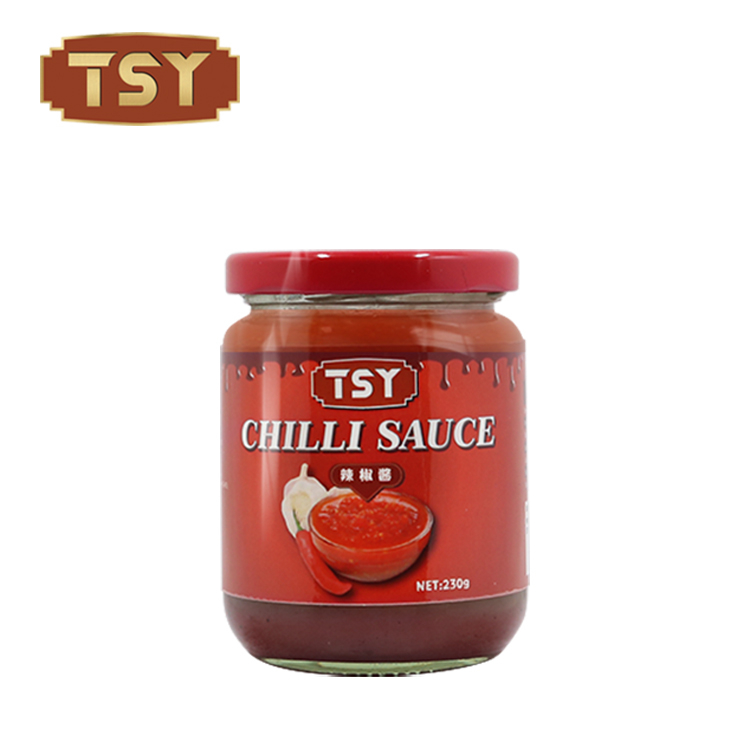
How to Serve Sweet Chili Sauce
To serve Sweet Chili Sauce effectively, it should be presented as a dipping agent for fried appetizers, a glaze for roasted meats, or a base for spicy dressings, ensuring the sauce is served at room temperature or slightly warmed to unlock the full aromatic profile of the Chili Sauce.
When considering the commercial application of Sweet Chili Sauce, the versatility of the product is its greatest asset. In high-volume kitchen environments, this Chili Sauce acts as a multi-purpose tool. It is famously paired with crispy textures, such as spring rolls, wontons, and coconut shrimp, where the sweetness cuts through the oil and the heat provides a lingering finish. The viscosity of the Sweet Chili Sauce allows it to cling to food surfaces, making it an ideal choice for buffet lines and quick-service restaurant dipping cups.
Beyond simple dipping, the culinary industry utilizes Sweet Chili Sauce as a foundational element in complex flavor layering. Chefs often use it as a finishing glaze for salmon or grilled chicken, where the high sugar content allows for beautiful caramelization under a broiler. It can also be whisked with lime juice and fish sauce to create a rapid Southeast Asian-style vinaigrette for slaw or noodle salads. The adaptability of this Chili Sauce ensures it remains a top-selling SKU for distributors catering to diverse culinary sectors.
From a presentation standpoint, the visual appeal of the Sweet Chili Sauce is paramount. A high-quality sauce should be translucent with visible flecks of red chili and white garlic suspended throughout the liquid. This "artisan" look signals freshness and quality to the consumer. For B2B buyers, sourcing or producing a Sweet Chili Sauce that maintains this clarity after being bottled or stored is a key indicator of a superior formulation.
| Serving Method | Recommended Pairing | Heat Level |
| Dipping Sauce | Spring Rolls, Dumplings, Fried Calamari | Mild to Medium |
| Glaze/Marinade | Roasted Salmon, BBQ Chicken Wings | Medium |
| Salad Base | Thai Cabbage Slaw, Cold Noodle Salad | Mild |
| Spread | Gourmet Burgers, Cream Cheese Blocks | Mild |
The Ingredients
The essential ingredients for a professional-grade Sweet Chili Sauce include granulated sugar for sweetness, rice vinegar for acidity, water as a base, red chili flakes for heat, and garlic for depth, often stabilized with a cornstarch slurry for the perfect consistency.
The selection of ingredients for a Sweet Chili Sauce determines the shelf stability and flavor hierarchy of the final product. Sugar is not merely a sweetener here; it provides the body and "syrupy" mouthfeel that consumers associate with high-end Chili Sauce. Rice vinegar is the preferred acidulent because it offers a milder, sweeter profile than white distilled vinegar, which can sometimes be too harsh for a delicate Sweet Chili Sauce.
The heat component of the Chili Sauce comes from dried red chili flakes or crushed chilis. For industrial production, the capsaicin levels must be standardized to ensure consistency across batches. Garlic provides the savory "umami" backbone that prevents the sauce from being one-dimensionally sweet. When these elements are combined, they create a chemically stable environment that, when properly bottled, offers a long shelf life, making it a favorite for bulk spice and sauce retailers.
To achieve the desired thickness without clouding the sauce, cornstarch or a similar thickening agent is used. In a professional Sweet Chili Sauce recipe, the ratio of starch to liquid is critical. Too much starch results in a gelatinous texture that is unappealing, while too little makes the sauce watery. The goal is a pourable, glossy Chili Sauce that coats a spoon evenly.
Granulated Sugar: Provides bulk and sweetness.
Rice Vinegar: Adds essential tang and acts as a preservative.
Water: Dilutes the acidity to a palatable level.
Dried Chili Flakes: Delivers the "kick" in the Chili Sauce.
Minced Garlic: Adds aromatic complexity.
Cornstarch Slurry: Creates the signature thick texture.
How to Make Sweet Chili Sauce
Making Sweet Chili Sauce requires a quick simmering process where the liquid ingredients and spices are brought to a boil, followed by the addition of a thickener to reach a glossy, translucent finish in under five minutes.
The manufacturing process for Sweet Chili Sauce is remarkably straightforward, which is why it is a high-margin item for food producers. The first step involves combining the water, vinegar, sugar, garlic, and chili flakes in a stainless steel vat or saucepan. The mixture is heated until the sugar is completely dissolved. During this phase, the heat helps to rehydrate the dried chili flakes, allowing them to release their color and heat into the liquid, tinting the Chili Sauce with a vibrant reddish hue.
Once the base liquid reaches a rolling boil, the cornstarch slurry is whisked in. This is a critical stage in Chili Sauce production; the starch must be pre-mixed with cold water to prevent clumping. As the mixture boils for another minute, the starch granules swell and clear up, transforming the liquid from a cloudy state to a crystal-clear, thick Sweet Chili Sauce. This rapid thickening process is ideal for commercial kitchens that need to replenish stock quickly during peak hours.
After the sauce has thickened, it is removed from the heat. In a B2B or industrial setting, the Chili Sauce is then cooled under controlled conditions to ensure safety and consistency. Cooling also allows the flavors to meld further, often resulting in a more balanced heat profile a few hours after cooking. This efficient workflow allows for the production of large volumes of Sweet Chili Sauce with minimal labor costs, maximizing the ROI for food manufacturers.
Sweet Chili Sauce Recipe
A standard commercial Sweet Chili Sauce recipe utilizes a ratio of 1/2 cup rice vinegar, 1/2 cup water, 1/2 cup sugar, 1 tablespoon chili flakes, and 1 tablespoon minced garlic, thickened with 1 tablespoon of cornstarch mixed in water.
Bulk Production Ratio Table
For businesses looking to scale this Chili Sauce, the following ratios are recommended for maintaining flavor integrity across larger volumes:
| Ingredient | Standard Batch | Large-Scale Batch (x10) | Purpose |
| Rice Vinegar | 120 ml | 1.2 Liters | Acidity & Preservation |
| Water | 120 ml | 1.2 Liters | Volume & Balance |
| Sugar | 100 g | 1 kg | Texture & Sweetness |
| Chili Flakes | 10 g | 100 g | Heat Component |
| Garlic | 15 g | 150 g | Flavor Depth |
| Cornstarch | 10 g | 100 g | Thickening Agent |
Step-by-Step Preparation
Combine Liquids: In a large pot, combine the rice vinegar, water, and sugar. Stir over medium-high heat until the sugar crystals are no longer visible.
Infuse Aromatics: Add the minced garlic and red chili flakes to the pot. This allows the Chili Sauce to develop its signature spicy-savory aroma.
Thicken: Once the mixture begins to bubble, slowly pour in the cornstarch slurry (cornstarch mixed with an equal part cold water).
Final Boil: Whisk constantly for 60 seconds. The Sweet Chili Sauce will transform from a thin liquid into a rich, glossy glaze.
Cooling and Storage: Allow the Chili Sauce to cool before transferring to sanitized glass bottles or containers for distribution.
The beauty of this Sweet Chili Sauce recipe lies in its simplicity. By avoiding artificial colors or high-fructose corn syrup, producers can market this as a "clean label" Chili Sauce, which is a significant trend in the current food industry. Providing a high-quality Sweet Chili Sauce that relies on natural ingredients allows brands to command a premium price point while keeping production costs low.
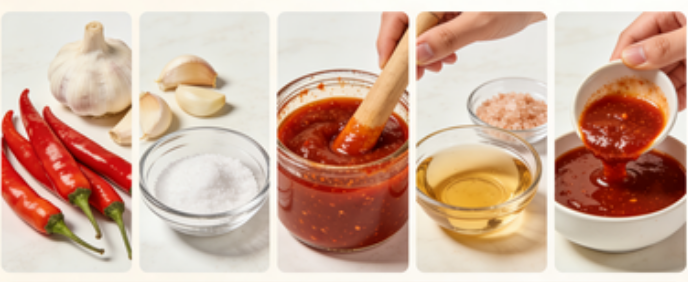
More Delicious Recipes to Spice Up Your Cooking
Expanding your repertoire beyond Sweet Chili Sauce includes exploring fermented hot sauces, chili oils, and fruit-based spicy glazes that utilize the same fundamental principles of balancing heat and acidity in a Chili Sauce.
The world of Chili Sauce is vast, and once a business has mastered the Sweet Chili Sauce, the next logical step is to explore related condiments. Chili oil, for example, is a popular choice for B2B exporters because it requires no refrigeration and has an incredibly long shelf life. By infusing neutral oils with the same chili flakes used in your Sweet Chili Sauce, you can create a secondary product line with zero ingredient waste.
Another growth area is the development of fruit-infused Chili Sauce. By replacing a portion of the sugar and water in the standard Sweet Chili Sauce recipe with mango puree or pineapple juice, you create a "Tropical Sweet Chili Sauce." This variation is highly sought after in the fusion food market and provides a unique selling proposition for distributors looking to offer something more than the standard supermarket variety.
Finally, exploring fermented Chili Sauce options, such as Sriracha-style sauces, allows for a deeper flavor profile. While these take longer than five minutes to produce, they share many of the same core ingredients as your Sweet Chili Sauce. Building a diverse portfolio of sauces ensures that a brand can meet the needs of various culinary traditions, from traditional Asian cuisines to modern Western BBQ.
Garlic Chili Oil: A shelf-stable favorite for noodle shops.
Mango Sweet Chili Sauce: A tropical twist on the classic recipe.
Sriracha Glaze: A fermented alternative for a bolder heat profile.
Honey Sriracha Sauce: Combining natural honey with the kick of a Chili Sauce.
Would you like me to help you design a bulk packaging label or a nutritional facts table for this Sweet Chili Sauce recipe?