The culinary landscape of Southeast Asia is defined by its vibrant balance of flavors, and few condiments represent this harmony better than Thai Chili Sauce. Known globally for its addictive blend of heat, sugar, and tang, this Sweet Chili Sauce has transcended its traditional roots to become a staple in kitchens from Bangkok to New York. Whether used as a dipping companion for spring rolls or a glaze for grilled meats, the right Chili Sauce can elevate a simple dish into a gourmet experience.
Thai Sweet Chili Sauce is a versatile condiment made primarily from red chili peppers, sugar, vinegar, garlic, and a thickening agent like cornstarch. It delivers a unique profile that is simultaneously spicy, sweet, and sour, making it the ideal dipping sauce or glaze for a wide variety of fried and grilled appetizers.
Understanding the nuances of a high quality Chili Sauce requires looking at both traditional techniques and modern manufacturing standards. For B2B suppliers and culinary professionals, the demand for authentic Sweet Chili Sauce continues to grow as consumers seek transparent ingredient labels and bolder flavor profiles. This guide provides a comprehensive look at the formulation, production, and application of this iconic sauce.
Table of Contents
What is Thai Sweet Chili Sauce?
Why make something you can easily buy?
Ingredients and Notes
How to Make Thai Sweet Chili Sauce
Tips for Success
What to Use Thai Sweet Chili Sauce On
Storage
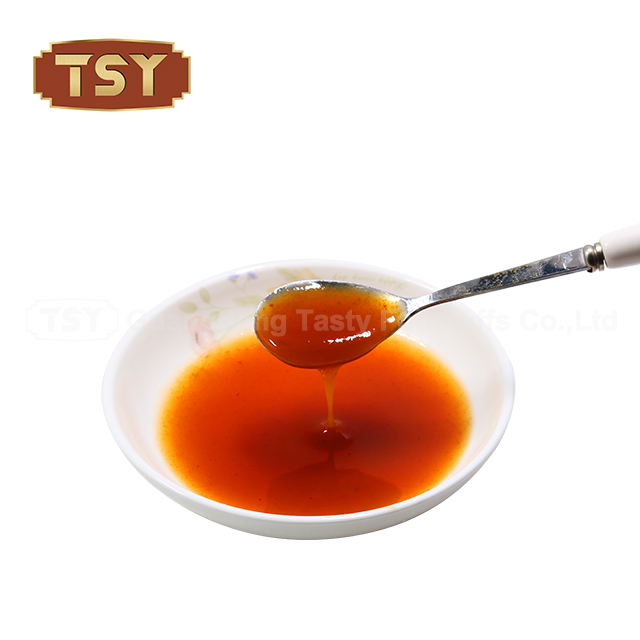
What is Thai Sweet Chili Sauce?
Thai Sweet Chili Sauce, also known in Thailand as Nam Chim Kai, is a translucent, reddish condiment characterized by visible chili flakes and garlic bits suspended in a thick, syrupy base.
Historically, this Chili Sauce was developed specifically to accompany grilled chicken, which explains its traditional name. Unlike many hot sauces that focus purely on capsaicin intensity, this Sweet Chili Sauce prioritizes the interplay between high sugar content and mild to medium heat. The texture is distinctively viscous, allowing it to cling to food surfaces effectively, providing a glossy finish that is as visually appealing as it is flavorful.
In the global food industry, Chili Sauce varieties are categorized by their heat levels and sugar-to-acid ratios. The Thai version is unique because it often utilizes pickled garlic or fresh garlic cloves, which adds a savory depth that balances the sweetness. As a fermented or semi-preserved product, it offers a complex umami background that simple sugar syrups lack.
For businesses looking to source or produce Sweet Chili Sauce, the quality of the chili pepper is the most critical factor. Traditionally, "mild" peppers like red jalapeños or Fresno chilies are used to provide the color and body of the Chili Sauce, while smaller, hotter bird's eye chilies may be added to increase the Scoville rating without overwhelming the palate.
Why make something you can easily buy?
Making homemade Thai Chili Sauce allows for complete control over the heat intensity, sugar levels, and the absence of artificial preservatives or stabilizers often found in mass-produced versions.
While commercial Sweet Chili Sauce is readily available, many high-end restaurants and food manufacturers prefer custom formulations. Commercial brands often rely heavily on high-fructose corn syrup and modified food starch to achieve shelf stability and low production costs. By preparing your own Chili Sauce, you can substitute refined sugars with palm sugar or honey, creating a more sophisticated flavor profile that appeals to health-conscious consumers.
Furthermore, the "freshness" factor of a boutique Chili Sauce cannot be replicated by shelf-stable bottled products. Freshly minced garlic and vibrantly red chilies provide a bright, clean taste that fades during long-term storage in plastic containers. For B2B entities in the hospitality sector, serving a signature Sweet Chili Sauce provides a unique selling point that distinguishes their menu from competitors using generic condiments.
Cost-efficiency is another major factor. When produced in bulk, the raw ingredients for Chili Sauce—sugar, vinegar, and chilies—are relatively inexpensive. Manufacturing a high-quality Sweet Chili Sauce in-house or through a private label partner like XingTasty allows for higher margins and a product that is perfectly tuned to the specific spice tolerance of a target demographic.
Ingredients and Notes
The foundation of a premium Sweet Chili Sauce consists of four main pillars: heat from red chilies, sweetness from sugar, acidity from vinegar, and aromatics from garlic and salt.
To create a professional-grade Chili Sauce, you should prioritize fresh ingredients. Red Bird's Eye chilies provide the necessary kick for an authentic Sweet Chili Sauce, but they can be blended with milder red peppers to adjust the spice level. Many manufacturers also use a small amount of salt to enhance the other flavors and act as a natural preservative within the Chili Sauce matrix.
Core Ingredient Breakdown
| Ingredient | Role in Chili Sauce | Professional Note |
| Red Chilies | Heat and Color | Use fresh for brightness, dried for depth. |
| Granulated Sugar | Sweetness and Texture | Provides the "syrupy" body of Sweet Chili Sauce. |
| Rice Vinegar | Acidity | Offers a milder, fruitier tang than white vinegar. |
| Fresh Garlic | Aromatic Base | Must be finely minced to stay suspended in the sauce. |
| Cornstarch Slurry | Thickening Agent | Ensures the Chili Sauce clings to fried foods. |
In addition to these basics, some variations of Sweet Chili Sauce include ginger for warmth or fish sauce for an added punch of umami. However, for a standard B2B offering, keeping the Chili Sauce vegan and gluten-free by sticking to the core ingredients ensures the widest possible market reach.
How to Make Thai Sweet Chili Sauce
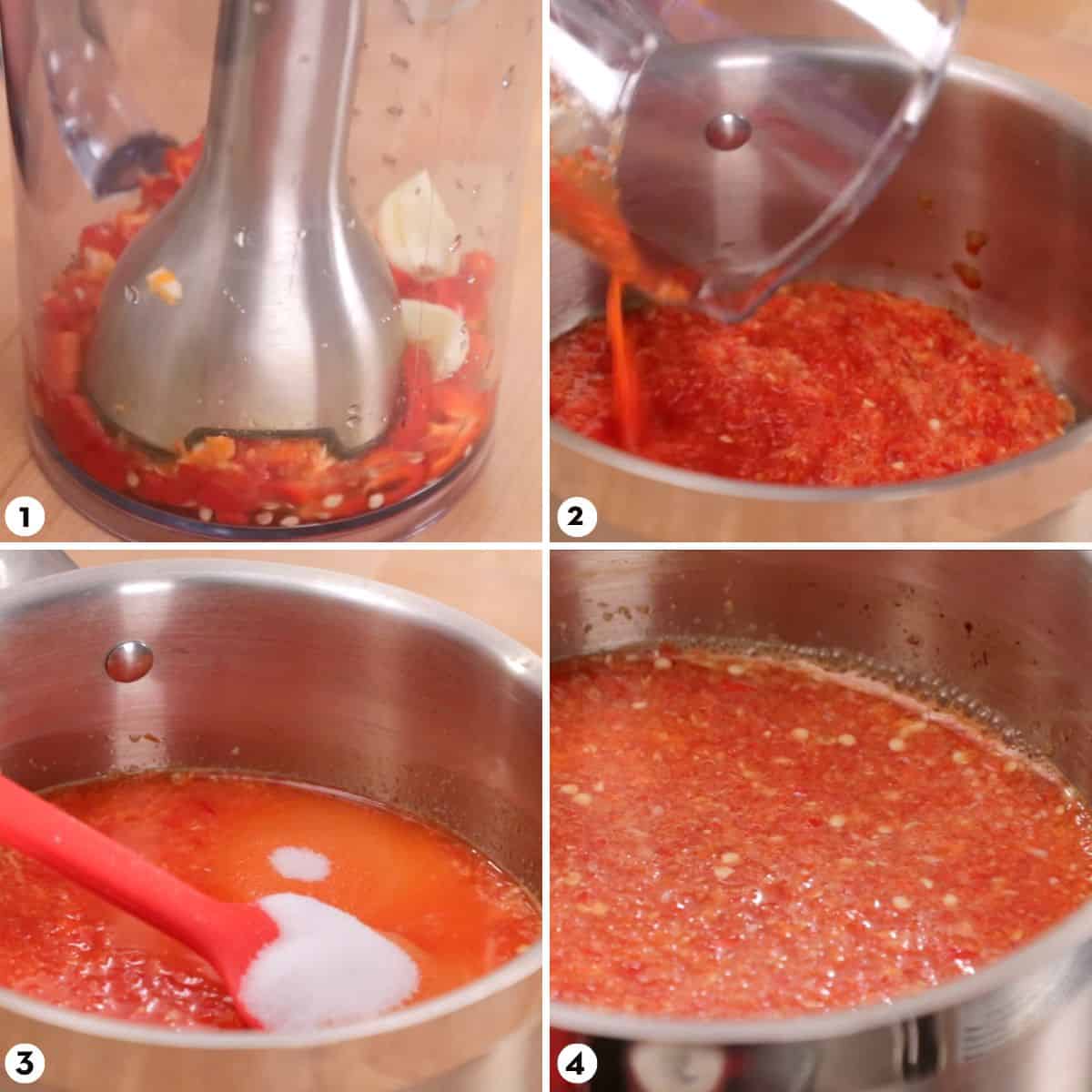
The production of Thai Chili Sauce involves simmering the base liquid with aromatics before adding a slurry to reach the desired viscosity.
The process begins by creating a chili-garlic paste. For a textured Sweet Chili Sauce, the chilies and garlic should be pulsed in a food processor rather than ground into a smooth puree. This ensures that the finished Chili Sauce has those iconic red flecks. This mixture is then combined in a stainless steel vat or saucepan with water, vinegar, and sugar.
Step-by-Step Production Process
Preparation: Finely mince the chilies and garlic. Ensure all seeds are retained if a higher heat Chili Sauce is desired.
Simmering: Bring the vinegar, water, and sugar to a boil. Once the sugar is dissolved, add the chili-garlic mixture.
Flavor Integration: Reduce the heat and let the Sweet Chili Sauce simmer for about 5 to 10 minutes. This softens the garlic and allows the capsaicin to infuse the syrup.
Thickening: Whisk in a cornstarch slurry (cornstarch mixed with cold water). Continue to cook the Chili Sauce until it turns from cloudy to clear and thickens.
Cooling: The Sweet Chili Sauce will continue to thicken as it cools. It must be cooled rapidly in a professional setting to maintain food safety standards.
For large-scale Chili Sauce production, temperature control is vital. If the sugar is overheated, it can caramelize, changing the color of the Sweet Chili Sauce from a bright red to a dark brown. Professional equipment ensures that the Chili Sauce reaches the exact point of starch gelatinization without scorching the delicate garlic bits.
Tips for Success
Achieving the perfect Sweet Chili Sauce requires careful attention to the clarity of the sauce and the balance of its flavor profile.
One common issue in making Chili Sauce is a "cloudy" appearance. This usually happens if the starch is not cooked long enough or if the ratio of water to vinegar is off. A high-quality Sweet Chili Sauce should be translucent, allowing light to pass through the syrupy base while highlighting the suspended chili flakes. If your Chili Sauce is too thick, it can be thinned with a small amount of warm water or additional vinegar.
Balancing the Flavor Profile
Adjusting Heat: If the Chili Sauce is too spicy, increase the sugar and vinegar proportions.
Controlling Sweetness: For a less sugary Sweet Chili Sauce, you can substitute part of the sugar with a dash of lime juice to add a different dimension of acidity.
Enhancing Umami: A small pinch of salt or a teaspoon of light soy sauce can make the Chili Sauce taste more "complete" without making it salty.
Another tip for professional Chili Sauce results is the "rest period." Like many fermented products, the flavors of Sweet Chili Sauce meld and deepen after 24 hours of refrigeration. If you are preparing this for a B2B client or a large event, making the Chili Sauce a day in advance will result in a more harmonious spice level and a better overall mouthfeel.
What to Use Thai Sweet Chili Sauce On
Sweet Chili Sauce is an exceptionally versatile condiment that functions as a dip, a marinade, a dressing, and a glaze across multiple cuisines.
The most classic application for this Chili Sauce is as a dipping sauce for Thai Spring Rolls, Fish Cakes (Tod Mun Pla), and Crispy Fried Chicken. The sweetness of the Sweet Chili Sauce cuts through the fat of fried foods, while the vinegar cleanses the palate for the next bite. In Western contexts, Chili Sauce has become a favorite topping for cream cheese appetizers and a popular dip for potato wedges or calamari.
Versatile Culinary Applications
Glazing: Brush the Sweet Chili Sauce onto salmon, shrimp, or chicken skewers during the last few minutes of grilling for a sticky, spicy crust.
Salad Dressings: Thin the Chili Sauce with a bit of olive oil and lime juice to create a vibrant Asian-style vinaigrette.
Stir-fry Base: Use the Sweet Chili Sauce as a shortcut for stir-fried noodles or vegetables, providing instant flavor and a glossy coating.
Sandwich Spread: Mix the Chili Sauce with mayonnaise to create a "sweet chili mayo" that works beautifully on turkey clubs or fish tacos.
Because Sweet Chili Sauce is generally mild compared to hot sauces like Sriracha or Tabasco, it is accessible to a wider audience, including children and those who are sensitive to heat. This broad appeal makes Chili Sauce a mandatory item for any commercial condiment lineup or restaurant pantry.
Storage
Due to its high sugar and acid content, Sweet Chili Sauce has a relatively long shelf life, but it must be stored correctly to maintain its color and flavor.
For homemade or artisanal Chili Sauce, refrigeration is essential once the container is opened. The high concentration of sugar in Sweet Chili Sauce acts as a preservative, but fresh garlic can eventually spoil if left at room temperature. When stored in an airtight glass jar in the refrigerator, a standard Chili Sauce will remain fresh for up to 3 to 4 weeks.
Professional Storage Guidelines
Vessel Selection: Glass is preferred over plastic for Sweet Chili Sauce because it does not absorb odors and allows for easier sterilization.
Temperature: Keep the Chili Sauce at a constant 4°C (40°F) to prevent the growth of mold or yeast.
Contamination Prevention: Always use a clean spoon when portioning out Sweet Chili Sauce to avoid introducing bacteria into the main batch.
In a B2B or industrial setting, Chili Sauce is often hot-filled into bottles to create a vacuum seal, allowing for a shelf life of up to a year without refrigeration until opened. However, once the seal is broken, the Sweet Chili Sauce should be treated as a perishable item. Monitoring the pH level of the Chili Sauce is also a standard practice for manufacturers to ensure it remains below 4.6, which is the safety threshold for shelf-stable acidified foods.
Summary of Thai Sweet Chili Sauce
In conclusion, Thai Chili Sauce is far more than just a simple condiment; it is a meticulously balanced blend of heat and sweetness that defines the Thai dining experience. From the selection of the perfect red chilies to the precise thickening of the syrup, every step in creating Sweet Chili Sauce contributes to its final success on the plate.
Whether you are a home cook looking to replicate authentic flavors or a business seeking to source the best Chili Sauce for your customers, understanding the ingredients and techniques involved is key. By focusing on quality aromatics and avoiding unnecessary additives, you can produce a Sweet Chili Sauce that stands out in a crowded market.