How to Store Opened Canned Pineapple?
Introduction: The Convenience of Cans and the Challenge After Opening
In our fast-paced modern lives, canned pineapple is undoubtedly a "lifesaver" in the kitchen. It eliminates the tedious process of handling that spiky, hard fresh pineapple, consistently providing us with the sweet aroma of tropical fruit. Whether it's making the classic pineapple upside-down cake, pairing with pizza and grilled meats, or simply mixing it into yogurt or smoothies, canned pineapple has won the hearts of consumers worldwide with its stable quality and unique flavor.
However, behind this convenience lies a common kitchen dilemma: What should you do with the leftover portion when you open a can of pineapple but can't finish it all at once? Should you just shove the can, juice and all, directly into the refrigerator, or does it require more complicated steps? Improper storage not only leads to flavor loss and poor texture but also poses potential food safety risks. Based on food science principles and recommendations from authoritative institutions, this article will provide a detailed guide on how to scientifically store opened canned pineapple.
Chapter 1: Why You Shouldn't Cut Corners — The Myth of "Storing in the Original Can"
This is the most common mistake, and the first bad habit we need to correct. Many people, for the sake of convenience, cover the can opening with plastic wrap or aluminum foil, or even leave it open, and then place it directly in the refrigerator. While this method might seem to protect the pineapple, it actually hides two major risks.
1. The Chemical Invasion of "Metallic Taste"
Pineapple is a highly acidic fruit. Once you open the can, the sealed environment designed to isolate air and microorganisms is compromised. The metal inner wall of the can (usually made of tin-plated steel sheet) begins to react chemically with the oxygen in the air and the highly acidic juice from the pineapple. This chemical reaction causes metal ions to leach out, not only giving the pineapple an unpleasant "tinny flavor" reminiscent of rust or blood but also posing potential health risks if excessive metal ions are ingested over time.
2. Food Safety and Physical Risks
Even if you cover the opening with plastic wrap, an inadequate seal cannot completely prevent bacteria and fungal spores present everywhere in the refrigerator from falling into the can. More importantly, the refrigerator is filled with various food odors. Due to its high sugar and high moisture content, pineapple easily absorbs surrounding odors (like the smell of garlic or leftovers), losing its fresh, fruity aroma.
Furthermore, if you mistakenly place an untransferred can of pineapple directly into the freezer, the consequences can be even more severe. Juice and syrup expand when frozen, potentially causing the metal can to rupture or deform, contaminating the entire freezer and potentially damaging the freezer's interior liner.
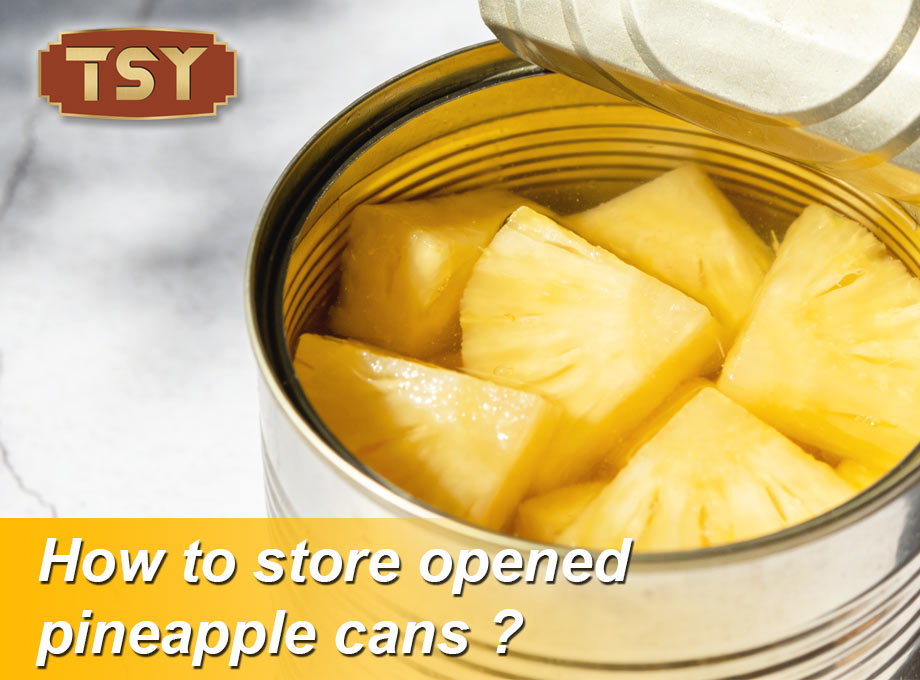
Chapter 2: The First Step in Scientific Storage — Container Selection and Basic Operations
The correct storage method begins the moment you open the can. After taking out the portion you need, you should immediately process the remainder.
Core Principle: Transfer! Transfer! Transfer!
Never leave the pineapple in the original metal can. This is a consensus among all food scientists and culinary experts. You need to find a "new home" for it.
The Gold Standard for Container Selection
The ideal storage container should meet the following criteria:
Food-Grade Material: Priority should be given to containers made of glass or High-Density Polyethylene (HDPE) plastic. Glass containers are non-porous, non-staining, non-odor absorbing, and their transparency makes it easy to observe the contents' condition, making them the best choice.
Good Seal: The container must have a tight-fitting lid capable of forming an effective seal. This prevents external bacteria from entering, locks in moisture to prevent the pineapple from drying out, and blocks odors inside the refrigerator.
Appropriate Size: Choose a container as close in size as possible to the remaining amount of pineapple to minimize the volume of air inside the container, thereby slowing down the oxidation process.
Detailed Steps
Prepare the Container: Ensure the container you plan to use is thoroughly cleaned with hot water and detergent, and then dried with a clean kitchen paper towel or left to air dry naturally.
Include the Juice: After opening the can, pour the remaining pineapple chunks (or slices, crushed pineapple) along with all the juice from the can into the prepared container. This juice is typically pineapple juice or syrup. Rich in sugar and acidity, it acts as a natural preservative, helping to maintain the pineapple's texture and flavor, and preventing the fruit flesh from oxidizing and turning black too quickly in the air.
Seal Tightly: Close the lid securely and, for good measure, label the container with the opening date using a sticker or marker. This small habit helps you accurately track the freshness of your ingredients.
Chapter 3: Refrigeration — The Best Solution for Short-Term Storage
Refrigeration is the most common and convenient way to handle opened canned pineapple.
Storage Duration: 5-7 Days
According to the United States Department of Agriculture (USDA) and various food storage databases, provided it is properly transferred to a sealed container and placed in the refrigerator (maintained at or below 4°C or 40°F), opened canned pineapple can be safely stored for 5 to 7 days.
Quality Changes During Refrigeration
During this period, the flavor and nutrients of the pineapple remain quite well preserved. Although canned pineapple, having undergone heat sterilization, lacks the specific "bromelain" enzyme found in fresh pineapple (which causes mouth tingling and is destroyed during heating), essential nutrients like Vitamin C and manganese are still well retained. As long as the container is properly sealed, you'll hardly notice a difference between it and freshly opened pineapple within the 5-7 day window.
Strategic Placement
Do not place the pineapple container on the refrigerator door. The door experiences the most temperature fluctuation in the entire refrigerator due to frequent opening and closing, making it unable to maintain a consistently low temperature. The container should be placed on a shelf towards the back of the refrigerator's main compartment, where the temperature is most stable and coldest.
Chapter 4: Freezing — The Smart Choice for Long-Term Storage
If you know you won't finish the pineapple within 5-7 days, or if you simply want to stock up some pineapple for future baking or smoothies, freezing is the best option.
Preparation Before Freezing
Simply tossing the container into the freezer won't work well; it requires some pre-treatment techniques:
Drain (Optional but Recommended): If you primarily want to preserve the fruit flesh rather than the juice, you can first drain the pineapple chunks in a colander. This is because pure liquid forms large ice blocks when frozen, taking up space and making the fruit mushy upon thawing.
Flash Freezing Method: Arrange the drained pineapple chunks in a single layer on a baking sheet lined with parchment paper, ensuring they don't touch each other. Place the baking sheet in the freezer for 1-2 hours, until the pineapple chunks are firm.
Portion and Store: Quickly transfer the frozen-hard pineapple chunks into freezer-safe sealable bags or vacuum-sealed bags. Remove as much air from the bag as possible. This effectively prevents "freezer burn" – the surface drying and flavor loss caused by dehydration. If you prefer to freeze with the juice, be sure to leave about 2-3 cm (1 inch) of headspace at the top of the container, as liquids expand when frozen.
How Long Does It Keep Frozen?
Best Quality Period: Under constant low temperatures of -18°C (0°F), pineapple maintains its best quality for approximately 2 months. Some sources, like Daily Meal, suggest it can be stored for up to 6 months if handled properly.
Safety Period: From a food safety perspective, as long as it remains continuously frozen, it can be safe to eat indefinitely. However, its texture, color, and flavor will gradually deteriorate over time.
Thawing and Using
How you thaw frozen pineapple depends on its intended use:
Overnight Thawing: Move the needed amount of pineapple from the freezer to the refrigerator and let it thaw slowly for 10-12 hours. This method thaws most evenly and is suitable for eating directly or using as a salad ingredient.
Quick Thawing: Thaw by submerging the sealed bag in cold water, or use the defrost function on your microwave. It's important to note that any food thawed quickly using a microwave or cold water must be consumed immediately and cannot be returned to the refrigerator.
Direct Use: For baking (like making a pineapple upside-down cake) or making smoothies, thawing is completely unnecessary; using frozen pineapple chunks directly works best.
Chapter 5: How to Tell if Pineapple Has Gone Bad — Sensory and Scientific Checks
Even if we follow all the storage rules, food can sometimes spoil unexpectedly. Before consuming any stored food, it's crucial to perform a "sensory check."
1. Look: Visual Inspection
Mold: This is the most obvious sign. If you see any white, green, or black fuzzy spots on the surface, discard the entire contents of the container immediately. Mold hyphae may have penetrated deeper than the eye can see.
Color: Normal canned pineapple in syrup should be a bright golden-yellow or light yellow. If the color appears dull, grayish, or shows brown spots, it indicates oxidation and spoilage.
Package Condition: For frozen storage, finding excessive ice crystals inside the bag or container, along with shriveled pineapple surfaces, indicates freezer burn. While safe, the quality is poor. In the case of mistakenly storing in the original can, any signs of leaking, rust, or bulging mean there's a potential risk of deadly pathogens like Clostridium botulinum. It is absolutely unsafe to eat.
2. Smell: Olfactory Check
Open the container and take a deep sniff. Fresh, properly stored canned pineapple should emit its characteristic sweet, fruity aroma. If you detect any sourness, fermented/alcoholic smell, mustiness, or an unpleasant "off" odor, it indicates significant microbial growth and should be discarded immediately.
3. Touch/Taste: Texture and Taste Check
Texture: Healthy pineapple chunks should be firm and crisp (freeze-thawed ones will be softer – a physical change, not necessarily spoilage). If the texture feels slimy, mushy, or falls apart easily when pinched, it means bacteria have broken down the pectin and tissue structure.
Taste: If it passes the above checks, you can try a tiny piece. If you notice a distinct metallic taste, bitterness, or an abnormal sourness, spit it out and discard the rest.
Chapter 6: Extended Knowledge — The Identity and Nutrition of Canned Pineapple
Now that you understand how to store it, let's delve a little deeper into the "protagonist" you're storing.
The Legal Identity of Canned Pineapple
In the U.S. Code of Federal Regulations (CFR), Title 21, Section 145.180, "Canned Pineapple" has an extremely strict definition. It stipulates that canned pineapple must be made from mature plants of the species Ananas comosus (L.) Merrill and defines various style forms, such as: Slices, Half slices, Tidbits, Crushed, Chunks, and Spears. The regulations even strictly control the sugar content (Brix value) of the packing medium (water, pineapple juice, syrup, etc.). For example, "Light sirup" must have a Brix value between 14% and 18%. These standards ensure that the quality of every can of pineapple we buy on the market is stable and controllable.
Canned Pineapple vs. Fresh Pineapple
Nutritional Comparison: Many believe canned foods are less nutritious than fresh ones. While the high-heat sterilization process does cause a slight loss of some heat-sensitive vitamins (like a minor reduction in Vitamin C) and destroys bromelain, the major nutritional components of pineapple — dietary fiber, the essential mineral manganese, and antioxidant compounds beneficial for immune health — are well retained. Especially if you choose varieties "packed in juice" with no added sugar, canned pineapple is actually a very healthy and convenient fruit option.
Culinary Characteristics: Interestingly, canned pineapple is the "chosen one" for making certain specific dishes. Bromelain in fresh pineapple has proteolytic (protein-digesting) properties; it prevents gelatin from setting, causing jellies or panna cotta to fail. During the canning process, this enzyme is permanently deactivated. Therefore, canned pineapple is the only correct choice for gel-based desserts like Italian panna cotta, fruit jellies, or yogurt salads.
Summary: Remember the Storage Rules with a Simple Guide
For the sake of your health and your taste buds, remember the "three-step process" for handling opened canned pineapple:
Immediately Transfer: After opening, promptly move the pineapple and its juice from the metal can into a sealed glass or plastic container.
Store Based on Need:
Short-term consumption (within 5-7 days): Seal tightly and place in the refrigerator (4°C / 40°F).
Long-term preservation (2-6 months): Drain (optional) or include juice in a freezer-safe bag/container, remove air, and place in the freezer (-18°C / 0°F).
Inspect Before Eating: Before consuming, always check the appearance, smell, and texture. If anything seems abnormal (mold, sour smell, sliminess), discard it decisively.
By following these simple yet scientific steps, you can not only maximize food utilization and minimize waste but also enjoy pineapple that is as safe and delicious as when it was first opened, anytime. Let this taste of the tropics stay fresh in your kitchen for a little while longer.
If you are interested in wholesale of sauces and noodles, you can leave a comment below, send us a message through our website, or connect with us on social media. Please feel free to contact us TSY Food for a good price.